Blog
Welcome


Recent posts
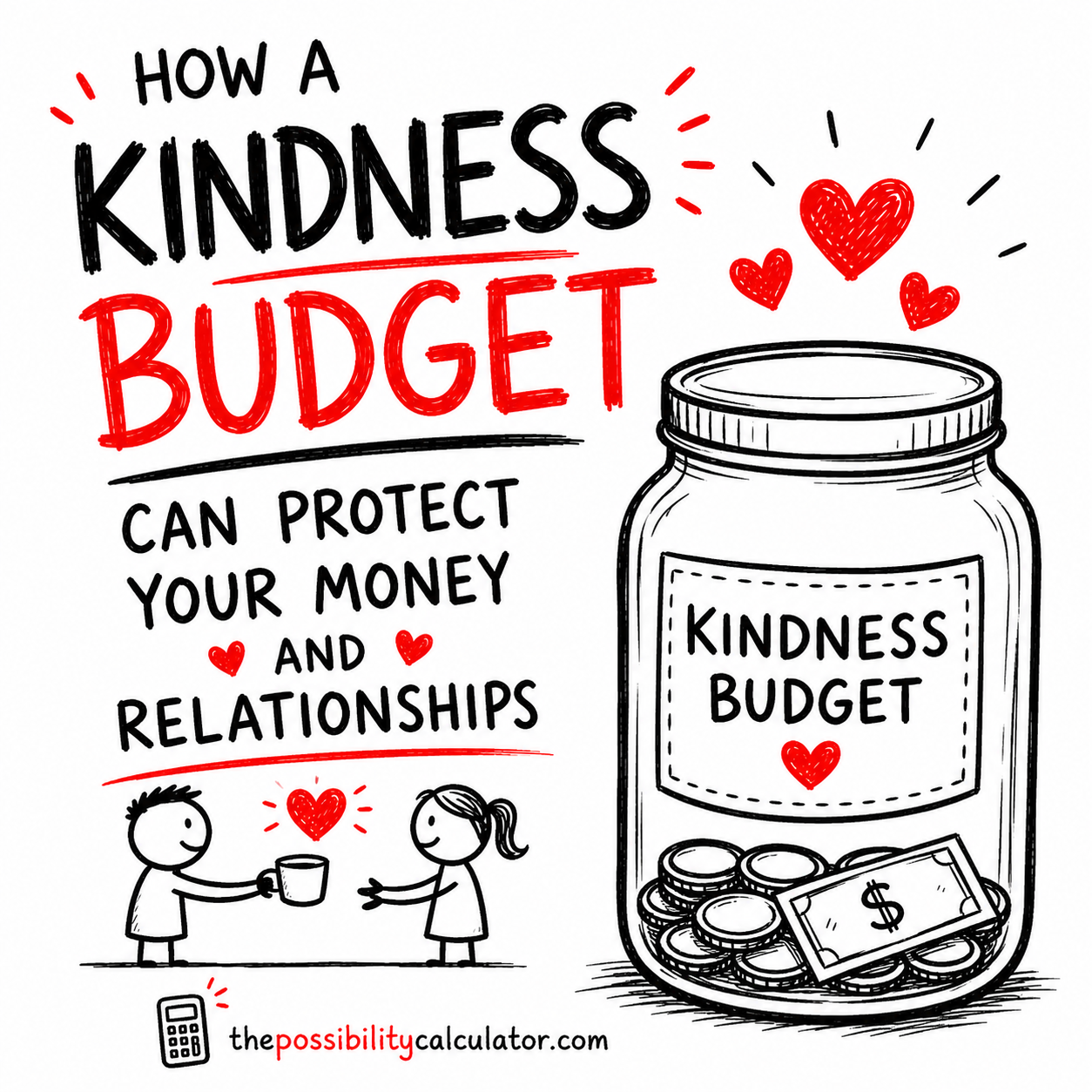
Most budgets have a line for power, food, rent, fuel and subscriptions.
Far fewer have a line for kindness.
But kindness often costs something.
It might be the extra groceries you buy when someone comes over. The petrol from always being the person who gives lifts. The small amount you send to an adult child. The meal you cover when a friend is having a hard week. The birthday present that becomes a little bigger because you know someone needs cheering up.
None of these are bad things.
In fact, they may be some of the best things money can do.
The problem is not generosity. The problem is invisible generosity.
If you quietly spend $35 a week helping people, hosting people, feeding people or covering little gaps, that becomes $1,820 over a year.
That number is not a reason to stop being kind.
It is a reason to decide on purpose.
A kindness budget might sound cold at first. But it can actually make generosity warmer, because it removes some of the hidden tension.
Instead of saying yes and then feeling anxious later, you can say:
“We’ve got a bit of room this month, so yes.”
Or:
“I can’t help with money right now, but I can bring dinner over on Thursday.”
Or:
“We’ve already used our helping-money for the month, so I need to be careful.”
That is not selfish. That is honest.
When kindness has no boundary, it can quietly turn into resentment. When every yes comes from the same money that was meant for bills, savings, debt repayment or rest, even good-hearted giving can start to feel heavy.
A visible kindness budget protects more than money.
It protects relationships from guesswork. It protects your future self from quiet panic. It protects your ability to keep helping without becoming exhausted. It helps you notice the difference between generosity and pressure.
And sometimes the most generous thing is not money at all.
It might be time. A cooked meal. A school pick-up. A phone call. A practical introduction. A quiet walk with someone who needs to talk.
If your numbers show that you genuinely do not have room to help financially right now, that does not make you unkind. It may simply mean this is a season for different kinds of support. And if the situation has moved beyond ordinary pressure into real financial hardship, it may be worth starting with the financial hardship resources rather than trying to carry everything quietly.
The point is not to turn love into a spreadsheet.
The point is to stop pretending love has no cost.
Because once you can see the cost, you can make better choices. You can decide what kind of generosity is sustainable. You can talk about it before resentment arrives. You can build a life where helping others is part of the plan, not a hidden leak in the background.
What if one small budget line helped you become not less generous, but more peacefully generous?
You might be surprised what becomes possible when you explore your own numbers in The Possibility Calculator.
Disclaimer : Please remember, this is purely an opinion and not advice. As I am not a financial advisor, and am not aware of your personal situation, so I can not offer personalised advice to you. So the content on this site reflects my opinions and experiences and is intended for general information only. It is not financial, legal, tax, or investment advice. Before making important financial decisions, please seek advice from a qualified professional who understands your personal circumstances.
Some articles are edited with the help of AI. The ideas and opinions are my own.
This entry was posted in people and relationships by Stephen Baugh